


Phones keep getting bigger.
At this point, some of them are basically tablets with a camera attached.
But despite the industry's obsession with giant screens, plenty of people still want a phone they can actually use one-handed… or fit into a normal jeans pocket without looking like they're smuggling a paperback novel.
The good news? Small phones are still around in 2026. They're just a little harder to find.
And to be clear, “small” doesn’t mean what it used to. The days of truly tiny 4-inch phones are long gone (RIP iPhone SE). In 2026, anything under about 6.3 inches counts as compact.
This guide covers the best small phones worth buying right now across both iPhone and Android. We’ll break down what to look for, which models are actually worth your money, and how to pair your new pocket-sized powerhouse with a phone plan that doesn’t destroy your wallet.
Once you pick your favorite, you can also use Goji to compare cell phone plans and find a better deal.
What Counts as a "Small Phone" in 2026?
Here’s the reality check: phone makers and shoppers don’t totally agree on what “small” means anymore.
A few years ago, a 6.1-inch phone would’ve sounded massive. In 2026? That’s considered compact.
Here’s the rough breakdown we’re using for this guide:
Truly Compact
- 6.1 inches and under
- These are rare today
- Best for one-handed use lovers
Comfortably Small
- 6.1"–6.3"
- The realistic “small phone” category in 2026
- Compact without sacrificing modern features
Borderline Small
- 6.3"–6.5"
- Smaller than most flagship phones
- Still usable with one hand for many people
It’s also important to remember that screen size isn’t everything.
A phone with thin bezels and a lightweight body can feel dramatically smaller than an older device with the exact same display size. Physical dimensions and weight matter just as much as the number listed on the spec sheet.
And thankfully, small doesn’t automatically mean weak or overpriced anymore. Several compact phones now pack flagship-level performance into surprisingly manageable sizes.
What to Look for in a Small Phone
Not every compact phone is actually good.
Some sacrifice battery life. Others cut camera quality. And a few are “small” in marketing only.
Here’s what actually matters when shopping for the best compact phones in 2026.
Screen Size & Dimensions
Screen size is only half the story.
What really determines how a phone feels in your hand is:
- Overall height and width
- Weight
- Thickness
- Bezel size
A 6.3-inch phone with ultra-thin bezels can feel smaller than an older 6.0-inch device with chunky borders.
When comparing small smartphones, look at the actual dimensions in millimeters and the weight in grams — not just the screen measurement.
Battery Life
This is the biggest trade-off with compact phones.
Smaller phones usually have smaller batteries because there’s less internal space.
As a baseline, look for:
- 3,000+ mAh batteries
- Efficient modern processors
- Real-world battery testing
The good news is that newer chips and battery tech are getting much more efficient. Small phones don’t lag behind nearly as badly as they used to.
Performance
Small phones used to be the “budget” versions.
Not anymore.
Most modern compact flagships now use the exact same processors as their larger siblings.
Look for:
- Apple A19 chips
- Snapdragon 8 Elite processors
- Google Tensor G5 chips
Mid-range chips are still perfectly fine for casual users. But if you game heavily or multitask constantly, flagship processors are worth it.
Camera Quality
Compact phones used to get the worst cameras.
Thankfully, that’s changed.
Phones like the iPhone 17 and Pixel 10 prove you can absolutely get incredible photography in a smaller body.
When comparing cameras, pay attention to:
- Optical zoom vs digital zoom
- Low-light performance
- Video stabilization
- Computational photography features
Megapixels matter… but not nearly as much as software processing.
Carrier Compatibility
A great small phone is only as good as the network it’s running on.
Before buying, make sure the phone is unlocked and supports major US carriers like Verizon, AT&T, and T-Mobile.
You can also use Goji’s coverage map to check which carrier performs best in your area before switching.
The Best Small Phones in 2026
These are Goji’s favorite compact smartphones worth buying right now.
We included a mix of flagship, mid-range, and budget-friendly picks for both iPhone and Android users.
And remember: refurbished phones can save you a ton of money if you’re open to older compact models.
Apple iPhone 17
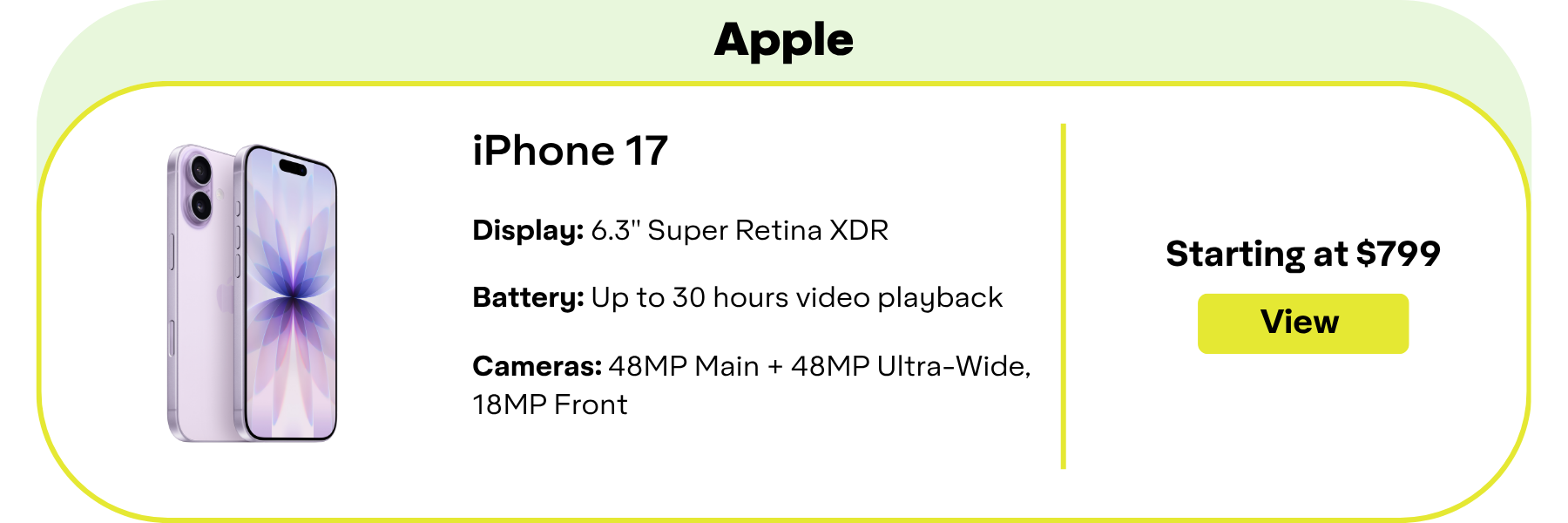
Best for: iPhone users who want flagship performance without carrying around a mini TV.
The iPhone 17 is basically the new gold standard for compact flagship phones.
At 6.3 inches, it technically isn’t “tiny,” but Apple slimmed down the frame enough that it feels noticeably easier to hold than older Plus and Pro Max models.
Key highlights include:
- A19 processor
- 120Hz ProMotion display across the lineup
- Excellent battery life for the size
- Strong cameras and video performance
The biggest downside is still the price.
And while this counts as “small” in 2026, nobody would mistake it for an iPhone Mini.
Still, for people who refuse to carry a giant phone, the iPhone 17 hits a really nice sweet spot.
Google Pixel 10
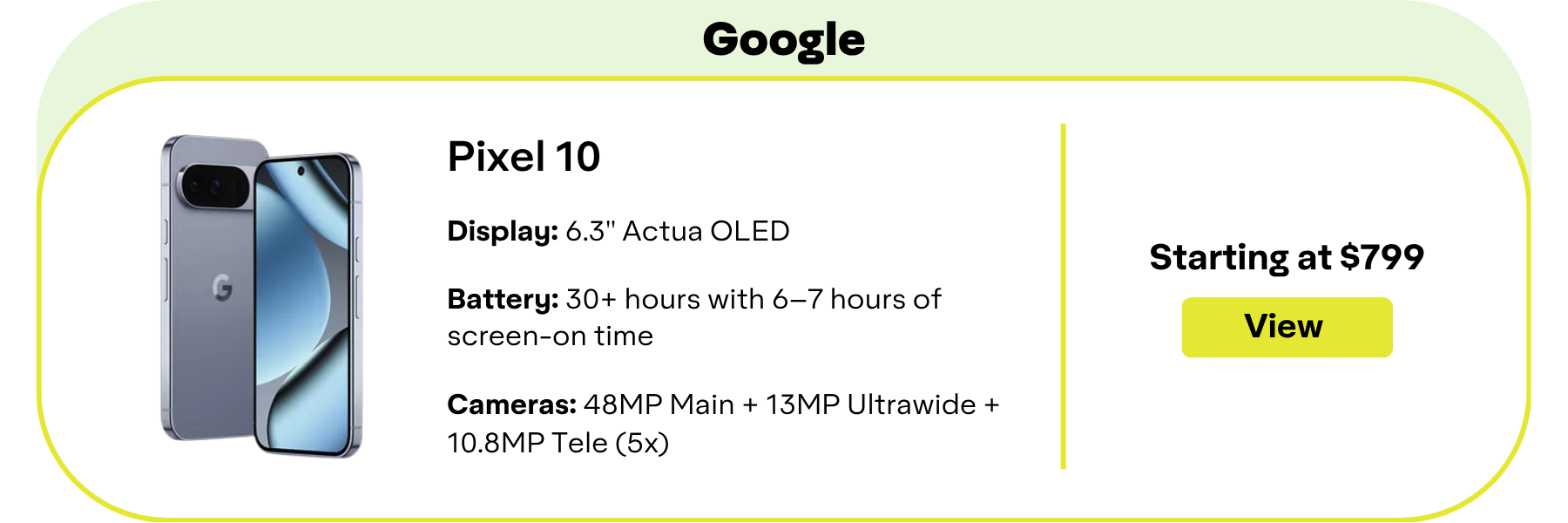
Best for: Android users who want elite cameras and clean software in a compact package.
If you want the best small Android phone in 2026, the Pixel 10 is probably it.
Google continues to dominate computational photography, and the Tensor G5 chip powers some genuinely useful AI features instead of random gimmicks nobody asked for.
What stands out:
- Incredible photo processing
- Clean Android experience
- Fast software updates
- Excellent voice and AI tools
There are still a few trade-offs.
Tensor chips tend to run a little warmer than Snapdragon processors, and battery life still trails slightly behind Apple.
But for Android purists and camera lovers, the Pixel 10 is hard to beat.
Samsung Galaxy S25
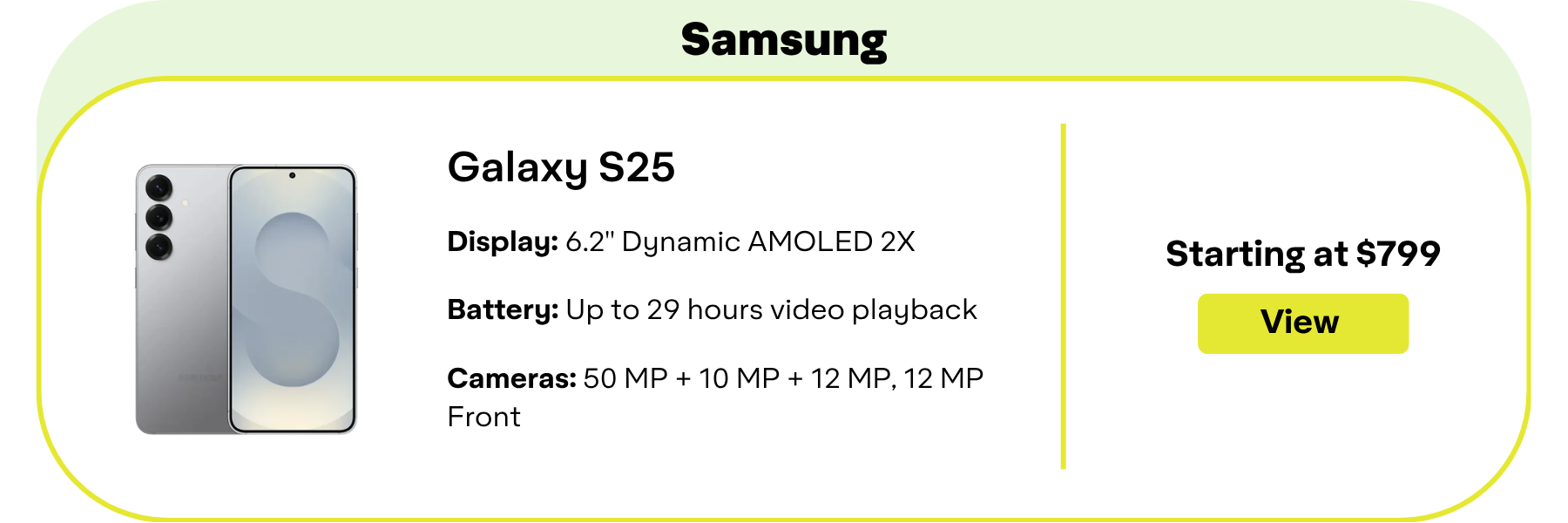
Best for: Samsung fans who want flagship features without the Ultra-sized brick.
The Galaxy S25 keeps Samsung’s tradition alive: flagship power in a reasonably manageable size.
With a 6.2-inch display, it’s one of the easiest premium Android phones to use one-handed.
Key features include:
- Snapdragon 8 Elite processor (US models)
- One UI 7
- Galaxy AI features
- Bright AMOLED display
The compromises are predictable.
Battery life won’t match the S25 Ultra, and there’s no S Pen support.
But if you’ve looked at giant Ultra phones and immediately said “absolutely not,” the standard S25 is probably the better fit anyway.
Apple iPhone 16e
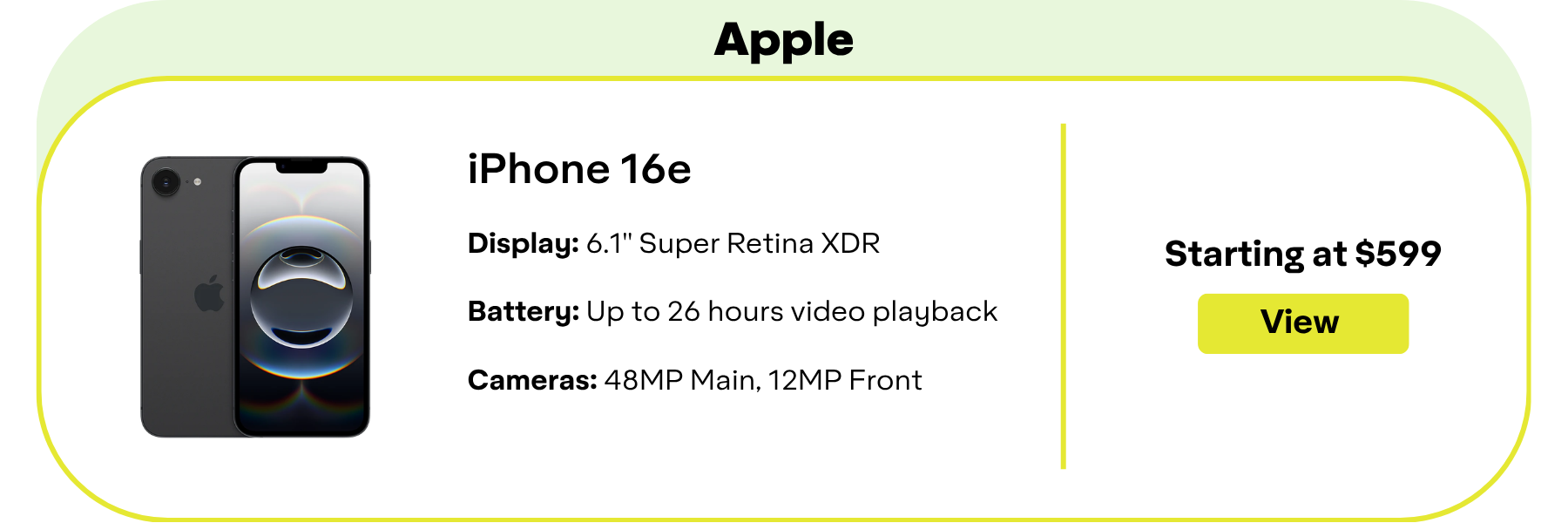
Best for: People who want a smaller iPhone without flagship pricing.
The iPhone 16e is basically the spiritual successor to the iPhone SE line.
It keeps the smaller form factor while finally modernizing the design with:
- OLED display
- Face ID
- USB-C
- Modern Apple silicon
And most importantly: it costs significantly less than Apple’s flagship models.
You do give up a few things.
The iPhone 16e has:
- A single rear camera
- Slower charging
- Fewer premium “Pro” features
But for budget-conscious Apple users, it’s one of the easiest recommendations on this list.
If you miss older compact iPhones, you may also enjoy this look at the history of the iPhone.
Google Pixel 9a
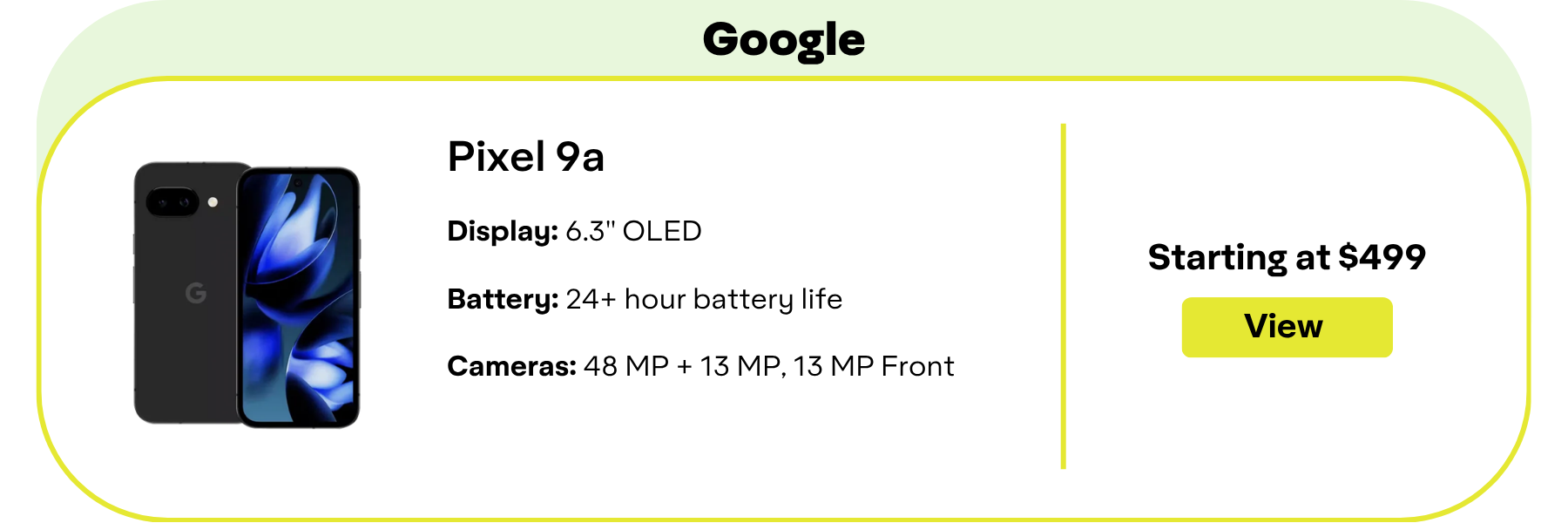
Best for: Android buyers who want the best value compact phone.
The Pixel 9a might be the value MVP of compact phones.
Google packed flagship-level performance into a much more affordable device.
Highlights include:
- Tensor G4 chip
- Excellent cameras for the price
- Strong battery life
- Clean Android experience
The trade-offs are mostly cosmetic.
The design feels less premium than the Pixel 10, and software updates may arrive slightly slower.
Still, for most people, the Pixel 9a delivers way more value than they actually need.
ASUS Zenfone (Latest Compact Model)
Best for: People who genuinely want a truly small Android phone.
ASUS is one of the last major brands still fighting the good fight for truly compact Android phones.
Most recent Zenfone models stay under 6 inches and often weigh under 150 grams.
That makes them feel dramatically smaller than almost every mainstream flagship.
Key features usually include:
- Flagship Snapdragon processors
- AMOLED displays
- Lightweight design
- Excellent one-handed usability
The downsides:
- Harder to find in carrier stores
- Fewer software updates than Samsung or Google
- More niche support in the US
But if you’re a small-phone purist who refuses to accept that 6.4 inches is “compact,” the Zenfone is one of the few remaining options.
Why Did Small Phones (Almost) Disappear?
Honestly?
Because people kept buying giant ones.
Over the last decade, phones got bigger because users wanted:
- Bigger screens for streaming
- Bigger batteries
- Bigger camera systems
- Better gaming experiences
And unfortunately, the iPhone Mini line didn’t sell well enough to survive.
Apple officially killed it off after the iPhone 13 Mini.
But demand for compact phones never completely disappeared. It just became more niche.
Brands like ASUS — and occasionally Sony — still cater to people who prefer smaller devices.
There are dozens of us.
Maybe even hundreds.
Refurbished Small Phones: A Smart Workaround
If you really want a tiny phone, refurbished models are often your best option.
Some of the best compact phones ever made are only available refurbished now.
Great refurbished small phones include:
- iPhone 13 Mini
- iPhone 12 Mini
- iPhone SE (2nd & 3rd gen)
- Google Pixel 5
Buying refurbished can save serious money while also giving you access to phones that manufacturers stopped making.
Just make sure you buy from reputable sellers that test devices and include warranties.
If you’re new to the idea, here’s a guide to refurbished phones explained.
You may also want to consider pairing a refurbished phone with:
- cheap phone plans
- prepaid phone plans
That combination is one of the cheapest ways to get excellent service on a major network.
And if you’re worried about durability, adding phone insurance can provide extra peace of mind.
Small phone. Smaller phone bill. Everybody wins.
How to Pair Your Small Phone With the Right Plan
Once you pick a phone, the next question is obvious:
Which plan should you actually use with it?
Here are the biggest things to consider:
Data Usage
Some compact-phone users are lighter users overall.
Others somehow watch 19 hours of TikTok a day on a 6-inch screen.
No judgment.
The key is figuring out how much data you actually use before overpaying for an unlimited plan you don’t need.
Coverage
Coverage matters more than almost anything else.
Before switching carriers, check:
- Which networks work best in your area
- Rural vs urban coverage
- Travel needs
You can use Goji’s coverage map to compare carriers side-by-side.
Budget
There are excellent plans at almost every price point now.
Depending on your needs, you may want:
- Budget prepaid plans
- Mid-range unlimited plans
- Premium plans with hotspot perks
Goji makes it easy to compare cell phone plans and find the cheapest option that still gives you the coverage and features you need.
Final Thoughts: Small Phones Are (Slowly) Making a Comeback
The small-phone market isn’t dead.
It’s just a little harder to find.
The good news is that compact phones in 2026 are dramatically better than they used to be. You no longer have to sacrifice performance, cameras, or battery life just to get something that fits comfortably in your hand.
Whether you want a premium flagship, a budget iPhone, or a truly compact Android, there are still some great options out there.
And once you find the right phone, pairing it with the right plan matters just as much.
Goji helps make that part easy by letting you compare carriers, plans, and coverage all in one place. Try Goji today.
Frequently Asked Questions
What’s considered a “small phone” in 2026?
In 2026, most people consider anything under 6.3 inches to be a small phone. Truly compact sub-6-inch phones are much rarer now.
Are small phones less powerful than big phones?
Usually no. Most modern small flagship phones use the same processors as their larger versions, so performance is nearly identical.
Do small phones have worse battery life?
Generally yes, because smaller bodies fit smaller batteries. But newer chips and battery tech have narrowed the gap significantly.
What’s the smallest iPhone you can buy in 2026?
The iPhone 16e is currently the smallest new iPhone at 6.1 inches. For anything smaller, refurbished iPhone Mini models are your best bet.
Are there any true compact Android phones left?
Yes, but not many. ASUS Zenfone models and some Sony Xperia devices are among the few remaining truly compact Android phones.
Can I bring a small phone to any carrier?
Usually yes, as long as the phone is unlocked and supports the carrier’s network bands. You can check compatibility and coverage using Goji’s coverage map.
Are refurbished small phones a good idea?
Absolutely. Refurbished phones are often the only way to get truly compact models like the iPhone 13 Mini, and reputable refurbishers typically test and warranty their devices.