


Mobile gaming in 2025 is no joke. The best phones for gaming are dropping console-level graphics on foldable phones that feel like mini handhelds, all playing from the cloud. From sweaty ranked lobbies to cozy farming, your phone can absolutely carry, or completely cook, your gaming stats.
This guide is here to help your gaming-on-the-go game with a simple breakdown of what affects your gaming experience, clear budget tiers, and a short list of the best phones for gaming in 2025, broken down by playstyle.
We focus on gaming performance first, then talk about value, all-around use, and what makes each phone great for actual humans, not just benchmark charts.
Why Gaming Phones Are Different (and What To Look For)
Not every new phone is built to be your gaming teammate. Gaming phones are specifically designed to keep your frame rate high, your phone cooler, and your battery alive long enough to finish “one more match.” The right mix of screen, power, cooling, and battery turns your phone from your biggest opp to your star player.
Key hardware specs that matter for gaming
Think of these specs as your phone’s build. You don’t need to be an engineer to get the basics. Specialist reviews love to talk about this stuff, but here is the simple version so you can prioritize the phone features that matter to you:
Refresh rate (how smooth it looks): This is how often your screen updates each second. 60 Hz is okay. 90 Hz feels smoother. 120 Hz and up starts to feel like PC-level smooth.
Chip/SoC performance: The chip is your phone’s brain and graphics card rolled into one. A stronger chip means higher graphics settings, more stable frame rates, and less lag when the action gets wild.
RAM and storage: RAM helps your phone keep games and apps open without reloading all the time. Around 8 GB is comfortable for most gamers, 12 GB+ suits power users. Storage fills up fast with big games, updates, and clips. 256 GB is a safe starting point if you like a deep library.
Thermals and cooling: Long sessions heat up any phone. Gaming phones often add bigger internal cooling systems, special metal plates or heat pipes to spread warmth, and in some models, built-in cooling fans. Better cooling keeps performance steady instead of dropping frames once your phone gets toasty.
Battery and charging AKA how long you stay in the lobby: Games drain power faster than social apps. Look for a big battery and fast charging, so you can literally respawn quickly.
Screen size and shape: Larger screens make worlds, maps, and UI easier to see, but smaller phones are easier to hold for long stretches. Foldables can give you “mini tablet” space for RPGs and strategy games when opened up.
Speakers and audio: Good speakers and clear sound help with positional cues, footsteps, and ultimates. Bonus points for solid headphone support and low-lag Bluetooth for wireless earbuds.
Connectivity (5G and Wi-Fi): For online matches and cloud gaming, your connection is the whole game: Strong 5G keeps ping lower on the go. Modern Wi-Fi reduces lag at home and keeps matches smooth.
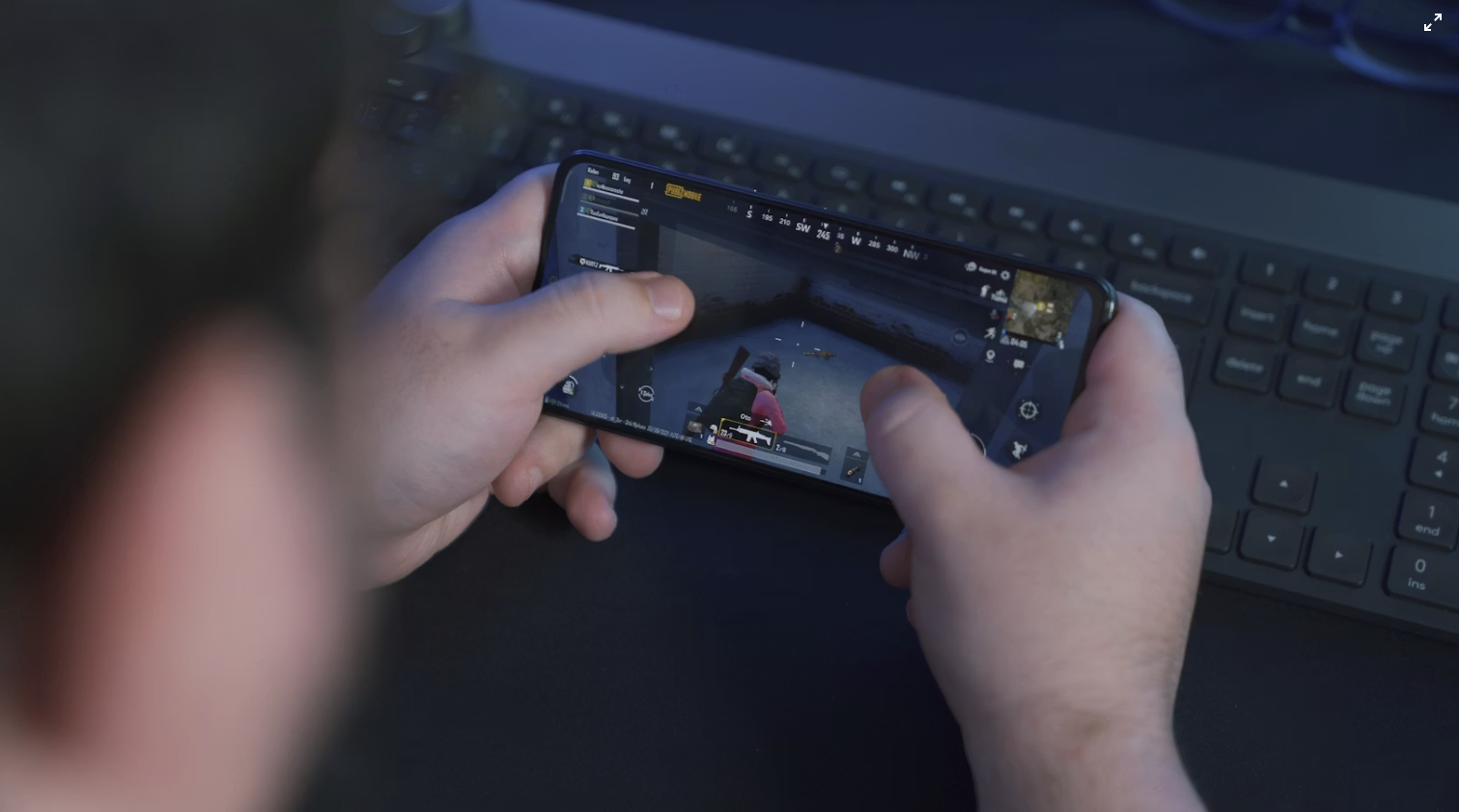
Gaming-specific features beyond specs
Once you cover the basics, gaming extras start to matter for how the phone feels in your hands.
Dedicated gaming modes: flip a switch, and your phone blocks notifications, focuses power on your game, and lets you tweak performance and touch settings per title. Basically turns your phone into anti-NPC mode.
Physical/virtual triggers: Many gaming phones add shoulder-style buttons along the side. You can map these to aim, fire, drift, or abilities, which frees your thumbs from doing everything.
Enhanced cooling systems: Some phones go further with extra large internal cooling parts and clip-on coolers. A built-in cooling fan that spins up when you launch a game. This helps keep frame rates steady during long grinds.
Smart gaming software: Game optimisers that let you pick “performance,” “balanced,” or “battery saver.”
Display tuning for color, brightness, and touch sensitivity: Per-game profiles so your favourite titles always launch with your ideal setup.
There is a trade-off. Phones that lean hard into gaming can:
- Be thicker and heavier.
- Drop camera quality compared to regular flagships.
- Hit higher prices once you add big RAM and storage options.
How Much Should You Spend? (Value Vs. Elite)
You don’t have to go full esports mode to enjoy mobile games. Think in tiers so your budget matches your playstyle.
Entry level gaming (roughly $300-$500)
- Good for casual games, turn-based RPGs, and MOBAs on lower settings.
- You might get a 120 Hz screen and a decent chip, just without all the fancy extras.
Mid-premium gaming (roughly $500-$800)
- Great for people who play daily and want higher settings and smoother frames.
- Often a strong balance of performance, battery, and decent cameras.
Full flagship and elite gaming (around $800 and up)
- Top chips, higher refresh screens, better cooling, and big storage.
- This is where most “serious” gaming phones and ultra-flagships live.
Top Gaming Phone Picks for 2025
There are more high-performance phones than ever that can crush modern mobile games, but we know you'd rather spend your time leveling up than scrolling through near-identical spec sheets. We’ve narrowed it down to a handful of standouts that each fill a clear role, from hardcore ranked grinders to casual nightly players.
Best Overall Gaming Phone: ASUS ROG Phone 9 Pro
The ASUS ROG Phone 9 Pro is the “I’m here to win” phone. It’s built for high frame rates, long sessions, and players who take their ranked climb seriously.
Specifications (at a glance):
- Peak level gaming chip tuned for high frame rates
- Large, fast OLED display with ultra smooth refresh rate
- Big RAM and storage options for game libraries and clips
- Advanced cooling system, plus support for clip-on fans and docks
Key strengths:
- Stays smooth in heavy 3D games during long marathons
- Shoulder triggers and gaming tools that make it feel like a pocket console
- Deep control over performance, touch input, and per-game profiles
Tradeoffs:
- Chunky, aggressive design that leans hard into “gamer” aesthetics
- Camera quality and lifestyle polish sit behind pure performance priorities
Best Value Gaming Phone: Nubia REDMAGIC 10 Pro
The REDMAGIC 10 Pro is the budget brawler. It hits flagship-level performance while keeping prices more approachable and sprinkling in gamer-focused extras.
Specifications (at a glance):
- High-end chip in a more affordable package
- High refresh AMOLED screen for silky motion
- Generous RAM and solid storage options
- Built in cooling fan and physical gaming switch for instant game mode
Key strengths:
- Outstanding performance-per-dollar for competitive titles
- Shoulder triggers, fan, and bold styling that feel purpose-built for play
- Strong thermal control for long gaming campaigns
Tradeoffs:
- Camera and software refinement trail the biggest brands
- Interface and styling can feel a bit loud if you’re more of a minimalist
Best For Gaming + Everyday Use: Samsung Galaxy S25 Ultra
The Galaxy S25 Ultra is the “one phone for everything” choice. It puts out serious frame rates in modern games but still nails photos, productivity, and everyday use.
Specifications (at a glance):
- Latest flagship chip with strong graphics performance
- Large, sharp OLED display with 120 Hz refresh
- Plenty of RAM and high-capacity storage options
- Big battery, fast charging, and long software support
Key strengths:
- Smooth gameplay in basically every major title
- Excellent camera system for photos, video, and content creation
- Polished software that feels premium day to day
Tradeoffs:
- Premium price tag
- Fewer “gaming phone” extras like built in fans or aggressive triggers
Best Mid-Range / Budget Phone For Gaming: Motorola Edge 2025
The Motorola Edge 2025 is the smart pick for everyday players. It handles popular games comfortably, runs smoothly as a daily driver, and keeps costs sane.
Specifications (at a glance):
- Capable mid-range chip good for medium to high settings
- Fast refresh OLED display, noticeably smoother than 60 Hz
- Solid RAM and 256 GB class storage on many models
- Large battery with very quick wired charging
Key strengths:
- Great mix of daily performance and gaming ability
- Strong battery life for long days that end with gaming sessions
- Price leaves room for accessories or a beefier data plan
Tradeoffs:
- Not ideal if you chase max settings and ultra high FPS in every game
- Lacks the more extreme gaming features found on specialist devices
Best iPhone For Gaming: Apple iPhone 17 Pro Max
On the Apple side, the iPhone 17 Pro Max is the big-screen boss. It combines Apple’s top chip, a smooth display, and excellent cameras in one device that handles both high-intensity matches and real-life duties.
Specifications (at a glance):
- Latest A-series chip with strong GPU performance
- Large OLED display with 120 Hz ProMotion refresh
- Big battery and wide range of storage options
- Deep integration with Apple Arcade and controller support
Key strengths:
- Fantastic performance and optimization in App Store hits and console-style ports
- Quality camera and video tools for streaming and clip highlights
- Simple, polished experience that stays fast over time
Tradeoffs:
- Expensive, especially at higher storage tiers
- Less flexible than many Android phones for emulators and deep system tweaks
Best Foldable Phone For Gaming: Samsung Galaxy Z Fold 7
The Galaxy Z Fold 7 is the “portable big screen” option. Closed, it behaves like a premium slab phone; opened, it becomes a mini tablet that makes RPGs, strategy games, and cloud streaming feel much more cinematic.
Specifications (at a glance):
- Flagship chip ready for demanding games
- Outer display for quick play, inner tablet-style screen for full immersion
- Plenty of RAM and storage for multitasking and big libraries
- Respectable battery, fast charging, and extended software support
Key strengths:
- Huge inner display makes complex HUDs and on-screen controls easier to manage
- Great for multitasking: guides, chat, or streams alongside your game
- Premium build and long support window that help justify the cost
Tradeoffs:
- One of the priciest phones on the list
- Heavier and thicker than standard phones
- The foldable shape takes some adjustment for fast-paced titles
- Fold 7 does not support the S Pen, unlike Fold 6.
How to Choose the Right Gaming Phone for You
Buying a new phone can feel intimidating. But think of picking out a gaming phone like choosing a main character in a new game: the “best” one depends on how you actually play. It’s not just about raw power. Your best gaming phone choice comes down to many factors: comfort, battery, the games you love, and the network you’re on when you queue up.
Think of this section as your character creation screen for phone shopping.
Match Your Gaming Style
Start with your playstyle and the type of games you play most. A phone that’s perfect for daily puzzle games is very different from one built for high-FPS shooters or streaming to an audience. The trick is to match the phone to how you play, how you hold it, and how often you ragequit at lag. Ask yourself:
- Do I play mostly on WiFi at home, or on the go?
- Do I want a light phone, or am I fine with something chunky and game-first?
- Do I use a controller or clip-on grip, or only touch controls?
- Do I record or stream gameplay, or just play for fun?
Quick Start Guide:
Casual and cozy games: mid-range phone, good screen, big battery.
Competitive multiplayer: fast screen, strong chip, good cooling.
Play plus content: gaming power, great cameras, plenty of storage.
Consider Ecosystem & Budget
Two big questions: iPhone or Android, and how much you want to spend.
- iPhone: polished titles, Apple Arcade, great controller support.
- Android: more gaming phones and foldables, more room for tinkering.
For online matches, your plan matters as much as your phone. Good coverage, low lag, and enough high-speed data keep matches smooth. That is where Goji comes in: helping you pair the right gaming phone with a plan that doesn't choke mid-match.
Budget snapshot:
Entry: casual games, older titles, some settings turned down.
Mid-premium: daily gaming, smoother frames, nicer screen.
Flagship: maxed settings, top cameras, long support, creator friendly.
Future-Proofing & Accessories
Think about future you, not just launch day hype.
Check:
- How long the brand usually supports its phones with updates.
- If the phone fits popular controllers, grips, and cooling fans.
- Whether it plays nicely with cloud services like Xbox Cloud Gaming or remote play.
Don't buy just for today’s benchmarks. Think about the next 2-3 years of bigger games, updates, and seasons.
Upgrade Your Gaming Phone With Goji
Here’s the TL;DR: the right gaming phone is a combo of strong hardware (chip, screen, battery, cooling), your playstyle (casual, competitive, creator), and a budget that doesn’t make your wallet say AFK. Specs matter, but only in the context of how you actually play and how you use your phone the rest of the day.
Pick the phone that fits your real life: the games you grind, the way you play, how often you record, and how much you care about cameras and storage. Then pair it with coverage and data that keep your ping calm, even when your team is not.
Ready to upgrade? Phone shopping can be easy. At Goji, you can compare phones and plans side by side, and lock in a setup that feels good on day one and still holds up a few seasons from now.
FAQs: Common Questions about Gaming Phones in 2025
Do I need a “gaming phone” specifically to play mobile games well?
Not always. A lot of “regular” phones run modern games on high settings without breaking a sweat. Dedicated gaming phones mainly add features like shoulder triggers, advanced cooling, and deeper tuning options. They shine if you play a lot, push higher frame rates, or love tweaking every setting.
How much does refresh rate matter for gaming on mobile?
A lot. Going from 60 Hz to 120 Hz makes motion look smoother and aiming feel more natural. It is not just a fancy number, it actually changes how responsive your game feels. Once you get used to high refresh, dropping back down feels like lag even when your connection is fine.
Will mobile gaming demand drop once cloud gaming grows?
Cloud gaming moves the heavy lifting to servers, but your phone still handles the stream, inputs, and network. You still want a good screen, solid connection, and a phone that won’t overheat. Cloud services can help mid-range phones feel stronger, but high quality hardware still gives you a better experience.
Are iPhones good for mobile gaming compared to Android gaming phones?
Yes. iPhones are known for strong performance, tight optimization, and great game support. Dedicated Android gaming phones pull ahead on customization, features like triggers and fans, and sometimes emulator support (allowing your phone to run games from other operating systems - like vintage game consoles). The best choice depends on how much you care about deep tweaking versus a simple, stable setup.
How do cellular service and coverage impact mobile gaming?
Coverage is huge for online games. Getting enough fast data decides if your games feel smooth or if every fight turns into a lag montage. Pairing your gaming phone with the right plan is just as important as picking the hardware, and that is exactly what Goji helps you with.