


Buying your child’s first phone is a big milestone. It is also one more monthly bill to add to the family budget.
The good news is that your child probably does not need the newest phone or the most expensive unlimited plan. A reliable, affordable phone paired with the right amount of data is usually more than enough for calling home, texting friends, checking school apps, and staying connected after activities.
Our top combination is the iPhone 14 with US Mobile, but the best choice depends on your budget, your child’s age, and how they will use their phone. Below, we break down the best first phones and phone plans for kids so you can find the right fit for your family.
Best First Phones and Plans for Kids at a Glance
Our Favorite Phone and Plan Combinations
Some phones and plans naturally work better together. These are the combinations we would consider first.
You do not have to choose these exact pairings. The goal is to match a phone your child can use for several years with a plan that fits how much data they actually need.
How to Choose Your Child’s First Phone
The best first phone for kids is not necessarily the newest or most powerful one. Before comparing models, think about how your child will use the device and how much responsibility they are ready to handle.
Consider Their Age and Maturity
A younger child who mainly needs to call home may not need the same device as a teenager who uses school apps, navigation, social media, and a part-time work schedule.
Think about whether your child can:
- Keep track of the phone
- Charge it regularly
- Follow screen-time and app rules
- Avoid making unauthorized purchases
- Tell you when something is wrong with the device
A lost $200 phone hurts a lot less than a lost $1,000 phone. For many families, starting with an affordable or refurbished model is the safer choice.
Look for a Phone That Will Last
An inexpensive phone is not a good deal if it becomes slow, stops receiving updates, or needs to be replaced a year later.
Look for a phone with enough storage, dependable battery life, and several years of software support remaining. You should also check that it works with the carrier you are considering.
And buy a case. Children occasionally drop things. Adults occasionally drop things, too, but this article is not about us.
Set a Realistic Budget
You do not have to buy a brand-new flagship phone for your child to have a good experience.
A previous-generation iPhone, midrange Samsung device, or discounted Motorola phone can handle everyday tasks without the flagship price. Refurbished phones can also offer excellent value, especially when they have been professionally tested and graded.
Best First Phones for Kids
These phones offer a good balance of price, reliability, usability, and room to grow.
1. iPhone 14: Best Overall First Phone
.png)
The iPhone 14 is our best overall first phone for kids because it is modern enough to last but no longer carries the price of Apple’s newest models.
It gives kids access to familiar Apple features like iMessage, FaceTime, Find My, and Family Sharing. These can be especially helpful if the rest of the household already uses Apple devices.
Parents can use Apple’s built-in tools to manage app downloads, screen time, content restrictions, location sharing, and purchases. The phone also has a dependable camera and enough performance for school apps, games, streaming, and everyday communication.
Best for: Families that want a dependable phone their child can keep through middle school or high school.
What to consider: It costs more than the Android options on this list, so a strong case and screen protector are smart additions.
2. iPhone 13: Best-Value iPhone
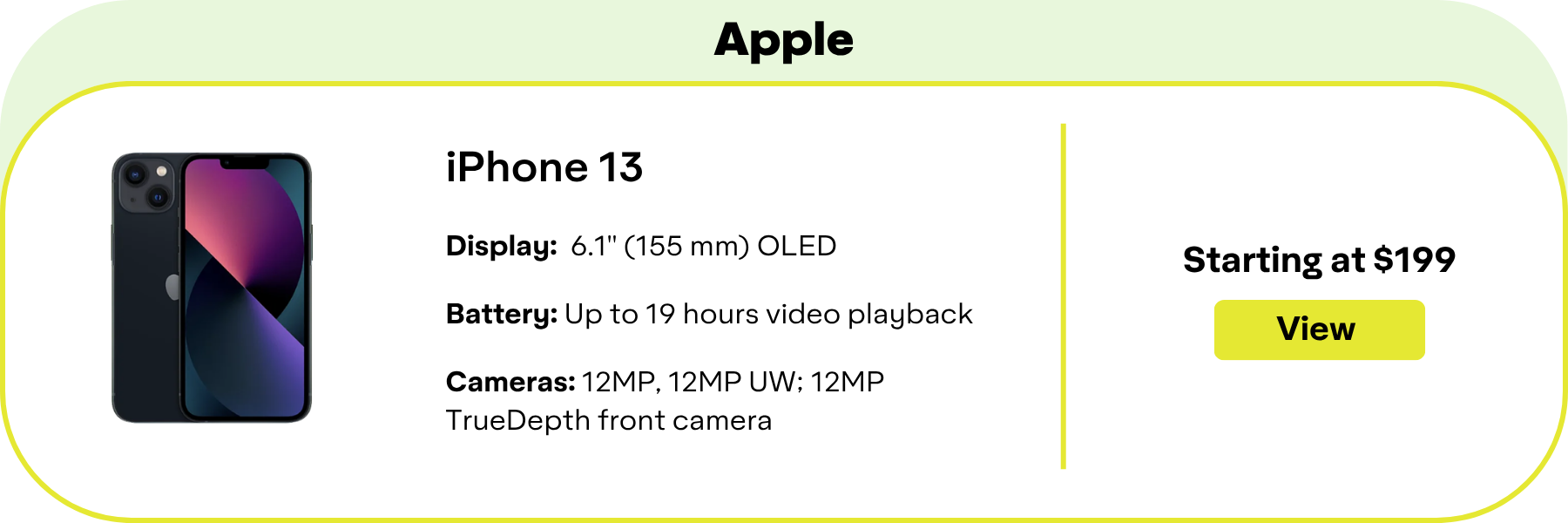
The iPhone 13 is a strong alternative for families that want an iPhone but do not need the newer iPhone 14.
It still provides the core Apple experience, including iMessage, FaceTime, Find My, and parental controls. It is also widely available refurbished, which can make it significantly more affordable than buying a newer model.
For calling, texting, schoolwork, photos, and everyday apps, the iPhone 13 should be more than enough for most kids.
Best for: Families already using Apple products who want to spend less on a first iPhone.
What to consider: Because it is an older model, compare its price with the iPhone 14 before buying. A small price difference may make the newer phone a better long-term value.
3. Motorola Edge 2024: Best Budget Phone
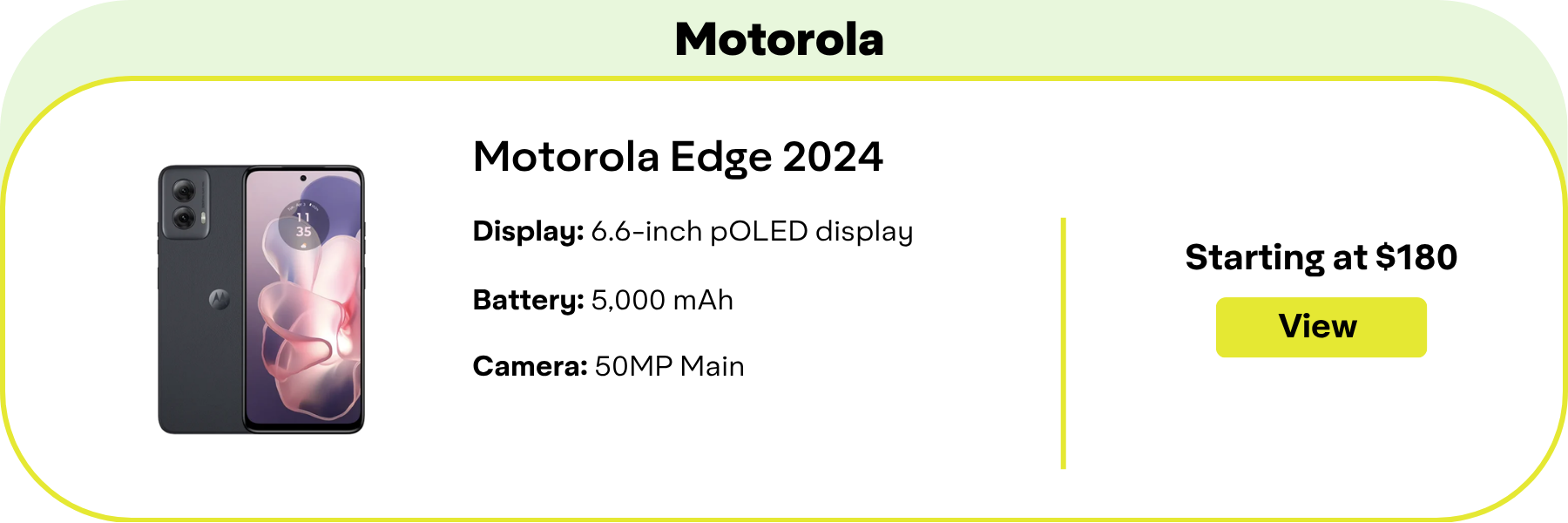
The Motorola Edge 2024 is our budget pick for families that want a capable smartphone without paying iPhone prices.
It has a large display and enough performance for calling, texting, browsing, school apps, and entertainment. At around $180 through Goji, it is much easier to justify as a first phone than many premium devices.
The lower price also makes it a practical choice for a younger child who is still learning to take care of a phone.
Best for: Parents looking for an affordable but fully capable first smartphone.
What to consider: Your child will not have access to Apple-specific features like iMessage or FaceTime. Make sure that works for your family and their usual group chats.
4. Samsung Galaxy A36 5G: Best Android Phone
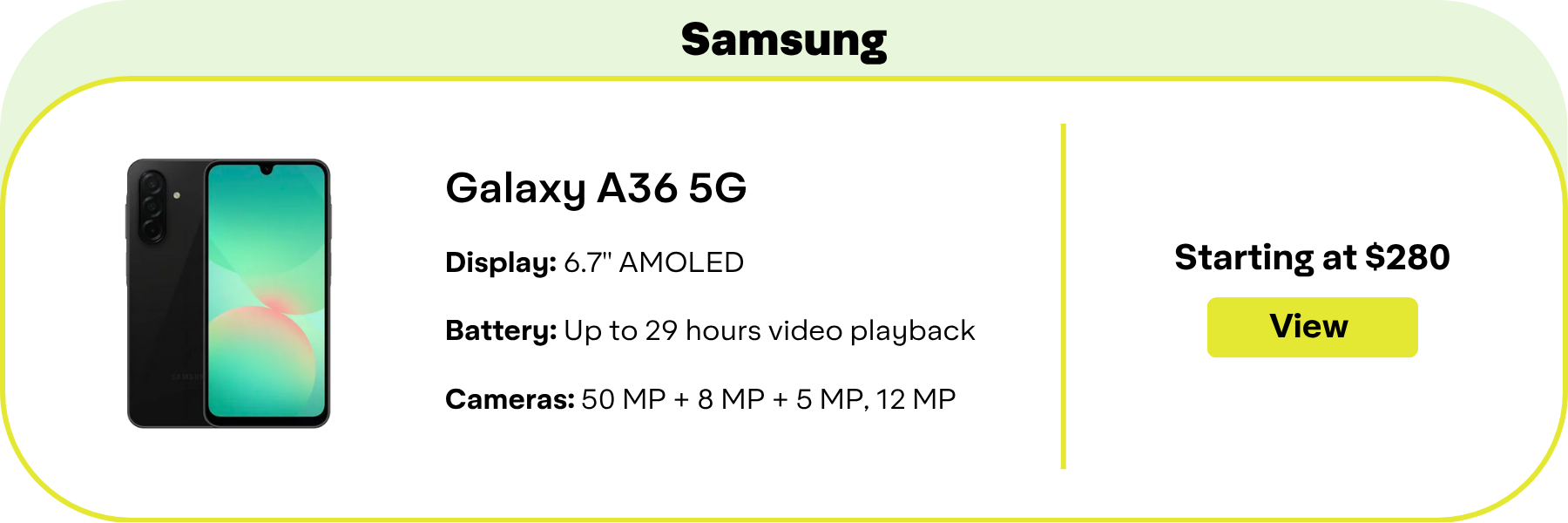
The Samsung Galaxy A36 5G is a good choice for families that prefer Android or already use Samsung devices.
Samsung’s A-series phones are designed to offer many of the everyday features people need without flagship pricing. The Galaxy A36 5G provides a large display, modern design, 5G connectivity, and enough performance for typical school and social use.
Best for: Kids who want a modern Android phone and families already familiar with Samsung devices.
What to consider: It may cost more than the Motorola Edge 2024, so the better choice depends on the current price and how long you expect your child to keep it.
First Phone Comparison
Best Phone Plans for Kids
Once you choose a phone, do not automatically add another expensive unlimited line to your family plan.
Many kids spend most of their time connected to Wi-Fi at home and school. They may only need a few gigabytes of cellular data each month for messaging, navigation, music, or occasional browsing away from Wi-Fi.
These plans offer affordable ways to start small while leaving room to increase data later.
1. US Mobile: Best Overall Phone Plan for Kids
US Mobile is our best overall phone plan for kids because it gives families several ways to start small and adjust over time.
Light users can begin with a By the Gig plan or the Light Plan. US Mobile’s Light Plan currently includes 2GB of data with unlimited talk and text for $8 per month. Families can also choose an affordable unlimited option when a child gets older and begins using more data.
That range is what makes US Mobile such a good long-term choice. You do not have to put a new phone user on unlimited data immediately, but you also do not have to switch carriers when their needs change.
US Mobile also provides access to multiple major networks. Coverage availability and plan features can vary by network, so compare the options available for your phone and location before choosing a network.
Best for: Families that want flexible plan choices and room to increase data as their child gets older.
Why we like it: You can choose a very light plan, pay based on usage, or move up to unlimited service without leaving the carrier.
2. Tello: Best Budget Phone Plan for Kids
Tello is one of the strongest options for a child who mainly needs calling, texting, and a small amount of data.
Plans are customizable, allowing parents to select the amount of data and calling time their child needs. Tello plans start at $5 per month, include unlimited texting, and can be changed as usage changes.
This flexibility is helpful for a first phone because you may not know how much data your child will use. You can begin with a low-cost plan, review their usage after a month or two, and increase the allowance when necessary.
Tello also lets families give each line a different combination of minutes and data rather than forcing everyone onto the same plan.
Best for: Younger kids, light data users, and parents who want the lowest possible monthly bill.
Why we like it: You can start with very little data and make changes without committing to an annual plan.
3. Mint Kids: Best Plan Designed for Kids
Mint Kids is a natural option for parents who specifically want a phone plan created and marketed for younger users.
Mint Kids starts at $15 per month and gives children the same service available through Mint Mobile while allowing a parent to oversee the account. Mint offers three-, six-, and 12-month options, with the service paid for upfront.
The main consideration is Mint’s multi-month payment structure. Paying several months at once can help secure a lower monthly rate, but it requires a larger upfront payment than a month-to-month carrier.
Mint Kids is especially appealing if a parent already uses Mint Mobile or wants a simple plan made specifically for a child’s first phone.
Best for: Parents who want a kid-focused plan and do not mind paying for several months in advance.
Why we like it: The plan is easy to understand, parent-managed, and built around adding a child’s line.
4. Ultra Mobile: Best for Flexible Data Amounts
Ultra Mobile is a good option for parents who know approximately how much data their child needs.
Its lineup includes lighter data options such as 4GB, 8GB, and 12GB plans, along with larger plans for heavier users. The 4GB plan includes unlimited nationwide talk and global text, mobile hotspot use, and Wi-Fi calling. Ultra also offers one-month and multi-month payment options.
These clear data tiers make it easier to choose a plan that falls between very light service and unlimited data.
Ultra Mobile also includes international communication features that may be useful for families with relatives in other countries.
Best for: Kids who need a predictable amount of monthly data and families that value international calling features.
Why we like it: Parents can choose a specific data amount instead of jumping directly from a tiny plan to unlimited service.
Kids’ Phone Plan Comparison
Does Your Child Need Unlimited Data?
Probably not, especially if this is their first phone.
Many kids spend much of their day connected to Wi-Fi at home or school. Cellular data may only be needed during the commute, after-school activities, sports practices, or weekends away from home.
A plan with 5GB to 10GB may be enough for a child who mostly:
- Sends messages
- Checks email and school apps
- Uses navigation occasionally
- Streams music in moderation
- Browses social media away from Wi-Fi
Video streaming, frequent FaceTime calls, gaming, and using a phone as a hotspot consume data much faster. Older teens who regularly use these features may eventually benefit from unlimited service.
Start with a reasonable amount instead of guessing high. You can review your child’s usage after the first month and adjust from there.
For a more detailed estimate, read our guide to how much phone data your child actually needs.
How Much Should You Spend on a Child’s First Phone?
There is no single correct budget, but most families do not need to spend flagship-level money.
Under $200
This range is ideal for younger kids or anyone receiving their first smartphone.
A discounted model like the Motorola Edge 2024 can provide the essential smartphone experience without creating a financial crisis every time the phone gets too close to the edge of a table. You should also check current carrier phone deals, since promotions and trade-in offers can make other models much more affordable.
$200 to $400
This is often the sweet spot for a first phone.
You can find newer midrange Android phones and refurbished previous-generation iPhones that should last for several years. These devices tend to offer better cameras, performance, and software support than the cheapest options.
Over $500
Spending more may make sense for an older teenager who will keep the phone through high school or into college.
However, a premium phone is usually not necessary for calling, texting, school apps, navigation, and social media. Consider whether the additional cost provides a meaningful benefit before paying for the newest model.
Should You Buy a Refurbished Phone for Your Child?
A refurbished phone can be one of the smartest choices for a child’s first device.
Professionally refurbished phones are inspected, tested, and prepared for resale. They often cost significantly less than the same model purchased new, allowing you to buy a higher-quality device while staying within your budget.
Before buying, check:
- The phone’s cosmetic grade
- The return policy
- Whether the device is unlocked
- Carrier compatibility
- Battery condition or battery guarantee
- Whether a warranty is included
Avoid buying a used phone from an unknown seller unless you can verify its condition, payment status, and activation eligibility.
Our Recommendations by Age
Age alone should not determine which phone your child receives, but it can be a useful starting point.
Ages 9 to 11
For younger users, prioritize basic communication, durability, and a low total cost.
Phone: Motorola Edge 2024
Plan: A light or customizable Tello plan
Start with a small data allowance and increase it only when needed.
Ages 12 to 14
Middle school students may begin using more school apps, group messages, navigation, and social media.
Phone: iPhone 13 or Samsung Galaxy A36 5G
Plan: US Mobile Light, By the Gig, or Mint Kids
A moderate data plan should be sufficient for many students who have Wi-Fi at home and school.
Ages 15 to 18
Older teenagers may use their phones for work, driving directions, extracurricular activities, streaming, and staying in touch more independently.
Phone: iPhone 14 or Samsung Galaxy A36 5G
Plan: US Mobile or an Ultra Mobile plan based on expected data use
Unlimited data may make sense for a heavy user, but it should not be the automatic choice.
How to Set Up Your Child’s First Phone
Before handing over the device, take a few minutes to establish basic protections and expectations.
Add Parental Controls
Apple and Android phones include tools that can limit app downloads, purchases, explicit content, location access, and daily screen time.
Set these controls before your child begins using the phone rather than trying to add them after every app has already been downloaded.
Turn On Location and Device-Finding Tools
Enable Apple Find My or Google’s device-finding feature. These tools can help locate a lost phone and allow you to lock or erase it remotely.
Make sure both you and your child understand when location sharing will be used.
Protect the Phone
Install a case and screen protector before the phone goes into a backpack, locker, or gym bag.
You may also want to discuss who is responsible for repair or replacement costs if the phone is damaged or lost.
Agree on Phone Rules
Discuss where and when the phone can be used, which apps require permission, and what your child should do if they receive an uncomfortable message or encounter inappropriate content.
The best time to create expectations is before a problem happens.
Find the Right Phone and Plan with Goji
Your child’s first phone should make it easier to stay connected, not add an unnecessarily expensive line to your bill.
Goji lets you compare phones and plans from different providers in one place. You can shop for a phone that fits your budget, compare plan prices and data allowances, and check which networks provide coverage where your family needs it.
Start with what your child needs today. You can always increase their data or upgrade their phone as they get older.
Frequently Asked Questions
What is the best first phone for a child?
The iPhone 14 is our best overall choice because it is reliable, easy to manage, and new enough to last for several years. Families on a smaller budget should also consider the Motorola Edge 2024 or a refurbished iPhone 13.
What is the best phone plan for a child?
US Mobile is our best overall choice because it offers light, By the Gig, and unlimited options. Tello is particularly good for younger children and light users because parents can build an inexpensive plan around the amount of service they actually need.
Does a child need unlimited data?
Most children do not need unlimited data, especially when they regularly use Wi-Fi at home and school. Starting with 5GB to 10GB and reviewing actual usage is often more affordable.
Is an iPhone or Android better for kids?
Both can work well. An iPhone may be easier for families already using Apple devices, while Android phones often provide more affordable options and greater device variety.
Should I buy my child a refurbished phone?
A professionally refurbished phone can be a great first device because it usually costs less than buying new. Check its warranty, battery standards, return policy, unlocked status, and carrier compatibility before purchasing.
What age should a child get their first phone?
There is no perfect age. Consider whether your child needs a phone for safety or scheduling and whether they are mature enough to care for the device and follow your family’s rules.